


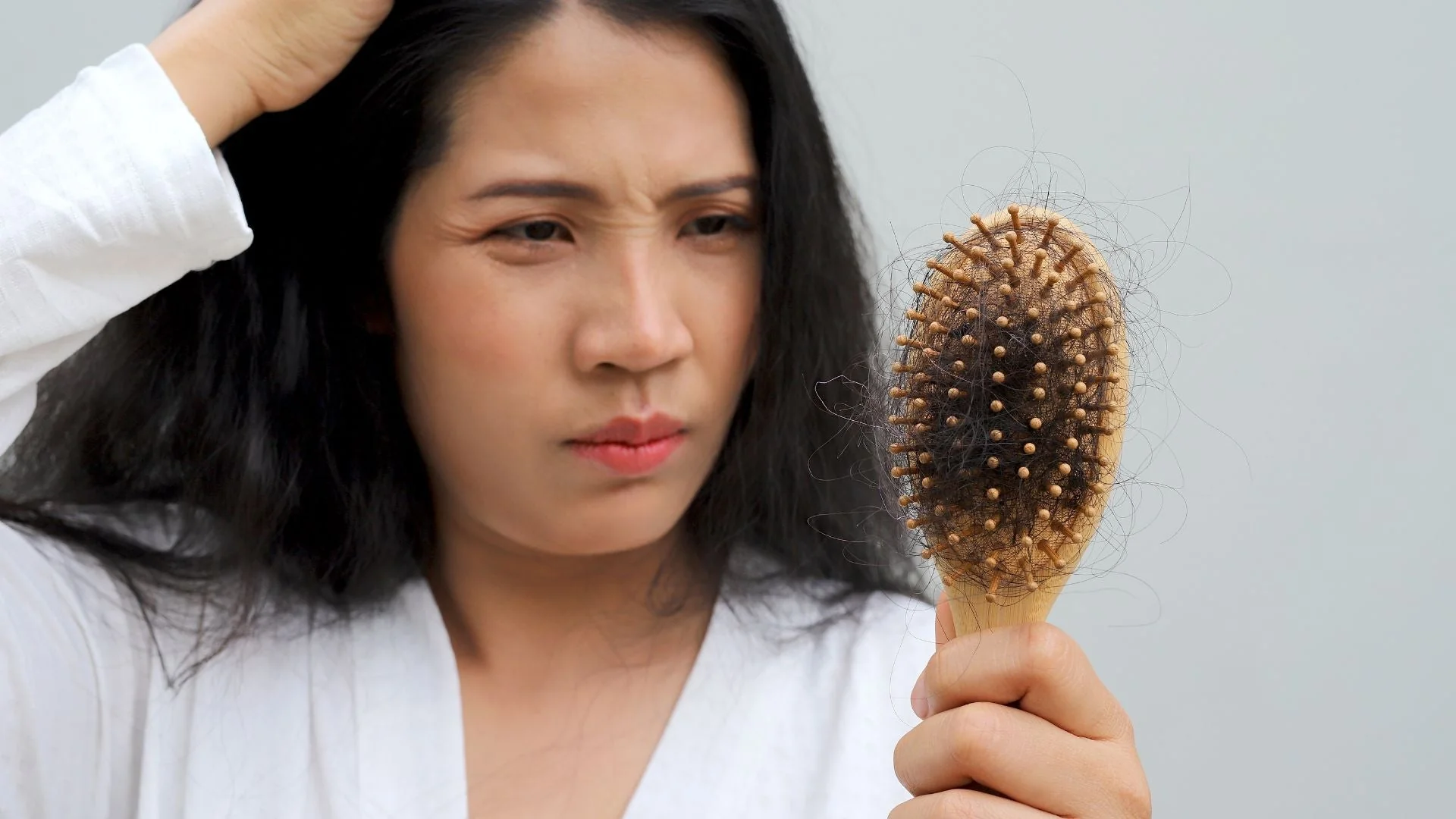
If you are noticing more hair in your brush or shower after starting treatment, you may wonder, can hormone replacement therapy cause hair loss? The answer is sometimes, but the relationship between hormones and hair is more complicated than simply saying HRT causes thinning. Hormones can influence the hair growth cycle, and changes in hormone levels may affect shedding, hair density, and the way individual follicles behave. At the same time, menopause, aging, thyroid problems, nutritional deficiencies, stress, and hereditary hair loss can all contribute to thinning hair.
Understanding what may be happening can help you identify whether your hair changes are related to hormone treatment or another underlying factor. The timing of your symptoms, the type of hormones being used, and your individual health history all matter when evaluating hair loss.
How Hormones Affect Hair Growth
Hair follicles respond to hormonal signals throughout the body. Changes in estrogen, progesterone, testosterone, and other hormones can influence how long hair remains in its active growth phase and how quickly follicles move into a resting or shedding phase.
Estrogen is particularly relevant for many women during menopause. As estrogen levels decline, some people notice that their hair becomes finer, grows more slowly, or appears less dense. Lower estrogen can also affect the overall hair growth cycle, making changes in hair thickness more noticeable with age.
Androgens such as testosterone also affect hair follicles. Their influence varies from one person to another because follicles have different levels of sensitivity to these hormones. In people who are genetically predisposed to pattern hair loss, changes in androgen activity can contribute to gradual thinning around the crown, part line, or temples.
Because several hormones interact with hair follicles, changing one hormone does not always produce the same result in every person.
Can Hormone Replacement Therapy Cause Hair Loss?
Hormone replacement therapyhormone-relatedbe associated with changes in hair growth, but that does not mean treatment directly causes hair loss in every Estrogen-basedeople may notice temporary shedding as their body adjusts to changing hormone levels. Others may experience improved hair fullness when hormone related changes were contributing to their thinning in the first place.
The specific hormones involved are important. Estrogen based treatment, progesterone, testosterone, and other hormone therapies can have different effects on hair follicles. Dose, delivery method, existing hormone levels, genetics, age, and individual sensitivity can also influence the outcome.
Someone who begins treatment and notices increased shedding may naturally assume the therapy is responsibof whether hormone replacement therapy can causation. Hair loss can begin around the same period for several different reasons, including menopause itself, illness, emotional stress, rapid weight changes, nutritional deficiencies, or a hereditary tendency.
For that reason, the question can hormone replacement therapy cause hair loss is best considered alongside the broader picture of your health and the specific treatment you are receiving.
Why Hair Loss Can Happen During Menopause
Menopause itself can cause noticeable changes in hair. As estrogen levels fall, some women experience increased shedding, reduced hair diameter, or a gradual decrease in overall density.
Changes in estrogen levels
Estrogen supports the active growth phase of hair follicles. When estrogen levels decline, more hairs may enter the resting phase of the growth cycle. The result can be increased shedding and a gradual reduction in fullness.
Not everyone experiences these changes to the same degree. Genetics play an important role, which is why one person may maintain thick hair during menopause while another develops obvious thinning.
Androgen sensitivity
Hormonal changes can also alter the balance between estrogen and androgens. In people with a genetic tendency toward pattern hair loss, follicles may become more sensitive to androgen activity.
This can lead to a widening part, thinning near the crown, or reduced density around the front of the scalp. The pattern can resemble hereditary hair loss even when hormonal changes have helped bring the condition to attention.
Could HRT Actually Improve Hair Loss?
Although people often ask whether HRT can cause hair loss, hormone therapy may have the opposite effect for some individuals. When declining estrogen is contributing to changes in the hair growth cycle, addressing hormonal symptoms may help reduce some of the effects associated with hormonal decline.
That does not mean HRT is a hair restoration treatment. Its primary purpose is to address symptoms associated with hormonal changes. Any improvement in hair can vary significantly between individuals.
Hair growth is also slow. Even when an underlying trigger improves, it can take several months before changes in shedding or density become noticeable. Expectations should therefore be realistic when evaluating whether treatment is affecting the hair.
What Other Factors Can Cause Hair Loss?
Hormones are only one possible explanation for thinning hair. Several common conditions can produce similar symptoms, which is why looking at the full picture is important.
Stress and illness
Significant physical or emotional stress can push a larger number of hair follicles into the resting phase. Increased shedding may become noticeable weeks or months after the triggering event.
A major illness, surgery, fever, or substantial emotional strain can have a similar effect. This type of shedding may improve once the underlying trigger has resolved.
Nutritional deficiencies
Hair follicles require adequate nutrients to support normal growth. Low levels of iron, vitamin D, zinc, protein, or other nutrients may contribute to shedding in some people.
Restrictive diets and rapid weight loss can also affect hair growth. If thinning begins after a major dietary change, nutritional factors may deserve attention alongside hormonal factors.
Thyroid changes
Thyroid disorders can cause diffuse thinning or increased shedding. Since thyroid problems can sometimes produce symptoms that overlap with menopause, including fatigue and changes in mood or weight, thyroid health may be relevant when evaluating unexplained hair loss.
Genetic hair loss
Hereditary pattern hair loss is another common cause. This type of thinning tends to develop gradually and may become more noticeable as hormone levels change with age.
Genetics can influence how strongly follicles respond to hormonal signals. That means two people receiving similar hormone treatment may experience very different changes in hair density.
Does the Type of Hormone Therapy Matter?
Yes. Different forms of hormone treatment can have different effects on the body, including the hair follicles. The hormones used, dose, delivery method, and treatment goals all need to be considered.
Estrogen therapy
Estrogen may help address symptoms associated with declining estrogen levels. When estrogen loss is contributing to hair changes, treatment may help some people maintain a more favorable hair growth environment.
Still, estrogen therapy does not guarantee thicker hair. Existing genetic hair loss or another underlying condition may continue independently.
Testosterone and androgen effects
Testosterone can have a more complex relationship with hair. In some people, increased androgen activity may contribute to thinning on the scalp, particularly when follicles are genetically sensitive to androgens.
At the same time, testosterone can support other aspects of health when used appropriately for a specific clinical purpose. The goal is to find an appropriate balance rather than assuming that one hormone is always good or bad for hair.
What About Hair Loss After Starting HRT?
If shedding begins after starting treatment, it is reasonable to investigate the timing without immediately stopping therapy. Hair growth cycles are slow, so a change that appears shortly after treatment begins may reflect a process that started earlier.
Hormonal adjustments can sometimes affect the timing of the hair growth cycle. Temporary shedding may occur as follicles shift between growth and resting phases. The amount and duration of shedding can vary considerably.
Your healthcare professional can review the hormone treatment, symptoms, health history, and other possible causes of hair loss. That assessment may help determine whether the treatment itself is likely to be contributing or whether another factor needs attention.
How Hormone Therapy Should Be Personalized
There is no single hormone replacement plan that produces the same results for every person. Your symptoms, hormone levels, age, medical history, treatment goals, and follow-up response to therapy all influence the approach.
At Bodyfix Medical, hormone care is tailored to the individual, with attention to symptoms associated with changing hormone levels and the broader health picture. Discussing changes in hair growth as part of your treatment follow up can help your healthcare professional determine whether your current plan needs review.
A treatment plan should also account for changes over time. If hair loss becomes more noticeable after starting treatment, the answer may involve adjusting the approach, investigating another cause, or addressing more than one factor at the same time.
When Should You Look Into Hair Loss?
Sudden or significant hair loss deserves attention, especially when it develops quickly or occurs alongside other changes. A rapidly widening part, visible scalp, bald patches, persistent shedding, or thinning that continues for months may indicate that something beyond normal hormonal changes is involved.
Scalp symptoms can also provide useful information. Itching, scaling, redness, pain, or inflammation may point toward a scalp condition rather than a simple hormonal change.
Keeping track of when the shedding started can be useful. Note whether it began before or after hormone treatment, whether your dose changed, and whether you experienced illness, major stress, weight loss, or dietary changes around the same period.
Can Hormone Replacement Therapy Cause Hair Loss Permanently?
Permanent hair loss is not an inevitable result of hormone replacement therapy. The outcome depends on the reason for the shedding and how the hair follicles are responding.
Temporary shedding may improve when the triggering factor settles. Other types of thinning, particularly hereditary pattern hair loss, can progress independently and may require a different treatment approach.
This distinction is important because treating the underlying hormonal symptoms may not fully address a separate hair disorder. Identifying the cause gives you a better chance of choosing the right strategy.
What Can You Do If Your Hair Is Thinning?
The first step is to look beyond the hair itself and consider what has changed recently. Hormone treatment, menopause, stress, illness, diet, medications, and genetics can all contribute.
It can also help to avoid aggressive hair practices while you are experiencing increased shedding. Frequent heat styling, tight hairstyles, harsh chemical treatments, and excessive brushing can make fragile hair more prone to breakage.
A healthcare professional can help determine whether the issue appears to be shedding from the root, hair breakage, pattern thinning, or another scalp condition. Those problems can look similar at first but require different approaches.
Conclusion
So, can hormone replacement therapy cause hair loss? It can be associated with changes in shedding or hair growth for some people, but HRT is not automatically the cause of every episode of thinning. Menopause, genetics, thyroid changes, nutritional deficiencies, stress, illness, and other factors can produce similar symptoms.
The type of hormone therapy, individual sensitivity, treatment dose, and timing of hair changes all matter. Rather than assuming that hormone treatment is responsible, looking at the complete picture can help identify what is really affecting your hair and whether your treatment plan needs to be reviewed.
Frequently Asked Questions
Can hormone replacement therapy cause hair loss?
It can be associated with hair changes in some people, but HRT is not always the cause. Hormonal changes, genetics, menopause, stress, nutritional issues, and other conditions can also contribute to thinning.
Does HRT make your hair grow back?
HRT is not specifically a hair restoration treatment. If hormonal changes are contributing to thinning, addressing those changes may help some people, but results vary.
Why am I losing hair after starting HRT?
Hair shedding after starting HRT can have several possible causes. Your body may be adjusting to changing hormone levels, or the timing may coincide with another cause such as stress, illness, nutritional changes, or hereditary hair loss.
Can menopause cause hair thinning?
Yes. Declining estrogen levels during menopause can affect the hair growth cycle and may contribute to increased shedding or reduced hair density.
Does testosterone replacement cause hair loss?
Testosterone can affect hair follicles, particularly in people who are genetically sensitive to androgen activity. The effect depends on individual biology, hormone levels, and the reason testosterone therapy is being used.
Should I stop HRT if I notice hair loss?
Do not assume that HRT is responsible based on timing alone. Hair loss has many possible causes, so discuss the change with your healthcare professional before making changes to your treatment.